
How to Hire a General Contractor in Miami: The Complete Checklist
Hiring a general contractor is one of the most consequential decisions you will make during any home improvement project. The right contractor transforms your vision into reality on time and within budget. The wrong contractor can turn your renovation dream into a nightmare of delays, cost overruns, shoddy workmanship, and legal disputes.
Miami’s construction market presents unique challenges for homeowners. The combination of Florida’s extreme weather requirements, Miami-Dade’s stringent building codes, and a competitive contractor landscape that includes both exceptional professionals and unscrupulous operators makes due diligence absolutely essential. At Royal Builders Miami, we welcome scrutiny because we know that informed homeowners make the best clients. Here is the complete checklist for hiring a general contractor you can trust.
Step 1: Verify the License
This is the single most important step in the process and the one most commonly skipped. In Florida, general contractors must hold a state-certified or county-registered license to perform construction work. Operating without a license is a criminal offense, yet unlicensed contracting remains disturbingly common in South Florida.
How to Verify:
- Visit the Florida Department of Business and Professional Regulation (DBPR) website at myfloridalicense.com
- Search by the contractor’s name or license number
- Confirm the license is active and in good standing
- Check for any disciplinary actions or complaints
For Miami-Dade County specifically, you can also verify through the Miami-Dade County Contractor Licensing section. A legitimate contractor will have no hesitation providing their license number upfront. If a contractor is evasive about licensing, consider that your first and most important red flag.
What the License Means: A state-certified general contractor (CGC prefix) has passed rigorous examinations covering construction law, business management, building codes, and technical competence. They are authorized to work anywhere in Florida. A county-registered contractor is licensed within a specific county but must meet similar qualification standards.
Step 2: Confirm Insurance Coverage
Adequate insurance protects you from financial liability if a worker is injured on your property or if the contractor’s work causes damage. Every contractor you consider should carry the following coverage at minimum:
General Liability Insurance with a minimum of $1 million per occurrence protects against property damage and bodily injury claims arising from the contractor’s work. If a subcontractor accidentally damages your neighbor’s property or a visitor is injured at your construction site, this policy responds.
Workers’ Compensation Insurance is required in Florida for contractors with one or more employees. This coverage protects you from liability if a worker is injured on the job. Without it, you as the property owner could be held responsible for medical expenses and lost wages.
Request certificates of insurance directly from the contractor’s insurance provider, not from the contractor themselves. Certificates can be fabricated, but a direct confirmation from the carrier is reliable. Also verify that the policies are current and will remain in effect for the duration of your project.
Step 3: Check References and Past Work
A quality contractor should be eager to share references from recent clients. Request at least three to five references for projects similar in scope and type to yours, and actually contact them.
Questions to Ask References:
- Was the project completed on time and within the original budget?
- How did the contractor handle unexpected issues or change orders?
- Was the contractor communicative and responsive throughout the project?
- Did the work pass all required inspections?
- Were there any issues after project completion, and if so, how were they resolved?
- Would you hire this contractor again without hesitation?
Beyond personal references, check the contractor’s presence on Google Reviews, the Better Business Bureau, and industry platforms. Look for patterns in the feedback rather than isolated positive or negative reviews. A contractor with hundreds of reviews averaging 4.5 stars and thoughtful responses to the occasional negative review demonstrates both quality work and professional accountability.
Step 4: Recognize Red Flags
The following warning signs should cause you to immediately reconsider a contractor:
Demanding Large Upfront Payments. A request for 50 percent or more of the total project cost before work begins is a major red flag. Florida law limits contractor deposits to 10 percent of the contract price or $1,000, whichever is less, unless the contractor has a surety bond or certain other financial assurances in place. A reasonable payment structure ties payments to completed milestones.
Pressuring You to Decide Immediately. Statements like “this price is only good today” or “I have another client who wants this slot” are high-pressure sales tactics. Reputable contractors provide written estimates that are valid for 30 days or more and allow you time to make an informed decision.
No Written Contract. Any contractor who proposes to work on a handshake agreement is either inexperienced or dishonest. A detailed written contract is non-negotiable and protects both parties.
Unusually Low Bids. When one bid comes in dramatically lower than all others, it typically means the contractor is cutting corners on materials, using unqualified labor, or planning to hit you with change orders once the project is underway. Quality work has a market price, and extreme outliers should be viewed with suspicion.
No Permit Discussion. If a contractor suggests skipping the permit process to save time and money, walk away. Unpermitted work can void your insurance, create resale complications, and result in costly code enforcement actions.
Step 5: Understand the Contract
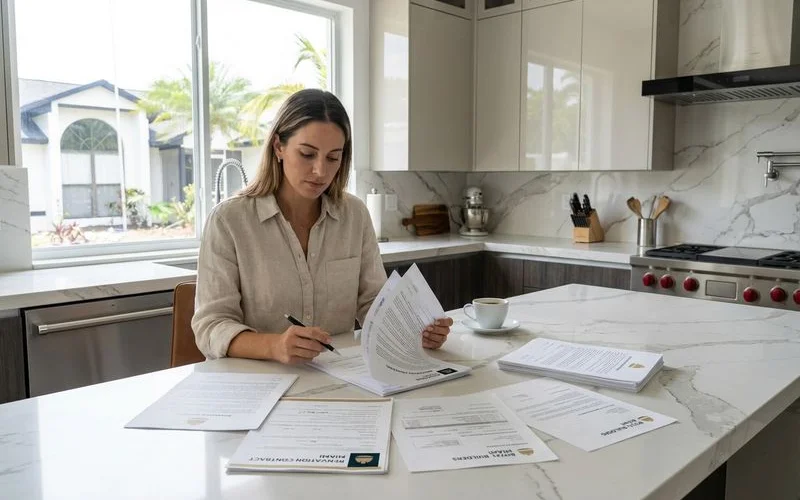
Your contract is the foundation of the entire working relationship. Read every word before signing and ensure the following elements are clearly addressed:
Scope of Work must describe in detail exactly what work will be performed, what materials will be used (with specific brand names and model numbers where applicable), and what the finished result will look like. Vague descriptions like “remodel kitchen” are insufficient. The scope should be specific enough that any qualified contractor could read it and understand exactly what is expected.
Payment Schedule should be tied to completion milestones, not calendar dates. A typical structure might include 10 percent at contract signing, 25 percent at completion of demolition and rough framing, 25 percent at completion of rough mechanical trades, 25 percent at completion of finishes, and 15 percent upon final inspection and client satisfaction.
Timeline should include a projected start date, key milestone dates, and a projected completion date. Include a provision addressing what happens if the contractor exceeds the timeline without reasonable justification.
Change Order Process defines how modifications to the original scope are handled. Every change should be documented in writing with the associated cost adjustment before the work is performed. Never accept verbal change orders.
Warranty Information should specify what is covered, for how long, and how warranty claims are handled. Industry standard is typically one year on workmanship and the manufacturer’s warranty on materials.

Step 6: Establish Communication Expectations
Before work begins, establish clear expectations for how you and the contractor will communicate throughout the project. The best contractor in the world will frustrate you if they are impossible to reach.
Key Communication Points:
- Who is your primary point of contact (owner, project manager, foreman)?
- How will updates be delivered (email, text, phone, in-person meetings)?
- How frequently will you receive progress updates?
- What is the expected response time for questions or concerns?
- How will issues or disputes be escalated?
A contractor who is organized and communicative during the hiring process will likely maintain that standard throughout the project. Conversely, a contractor who is difficult to reach before they have your deposit will not improve once the work is underway.
Essential Questions to Ask Before Signing
Conclude your evaluation by asking these direct questions:
- How many projects are you currently managing simultaneously?
- Will you be personally supervising the work, or will a foreman manage the day-to-day?
- Which subcontractors do you plan to use, and are they licensed and insured?
- How do you handle permit acquisition and inspection scheduling?
- Can you provide a detailed, itemized estimate rather than a lump-sum figure?
- What is your process for handling unexpected conditions or hidden damage?
- Do you carry a completion bond or offer any financial guarantee?
The answers to these questions will tell you everything you need to know about the contractor’s professionalism, capacity, and commitment to your project.
Choose With Confidence
Hiring the right general contractor is the single most impactful decision in any renovation project. By following this checklist, you eliminate the vast majority of risk and position yourself for a successful outcome. At Royal Builders Miami, we are proud to meet every standard on this list and invite you to verify our credentials, speak with our references, and review our portfolio. Contact us today to begin a conversation about your project.