Costly Kitchen Remodel Mistakes and How to Avoid Them
A kitchen renovation is a significant investment, and the decisions you make during the planning and construction phases will determine whether the result meets your expectations or becomes a source of regret. After completing hundreds of kitchen remodels across Miami-Dade County, we have seen the same mistakes repeated time and again. Here are seven of the most common pitfalls and practical advice for avoiding each one.
Mistake 1: Poor Layout Planning
The most expensive mistake you can make happens before a single cabinet is installed. A kitchen layout that ignores the work triangle, the relationship between the sink, stove, and refrigerator, creates a space that looks beautiful but functions poorly. Many homeowners fall in love with a design they see online without considering how it translates to their specific room dimensions and daily cooking habits.
Before committing to a layout, spend time thinking about how you actually use your kitchen. Where do you prep food? How do you move between the stove and the sink? Do you need an island for seating or for additional workspace? A qualified designer or experienced contractor can help you evaluate these questions and propose a layout that serves your lifestyle.
Mistake 2: Choosing the Wrong Materials for Miami’s Climate
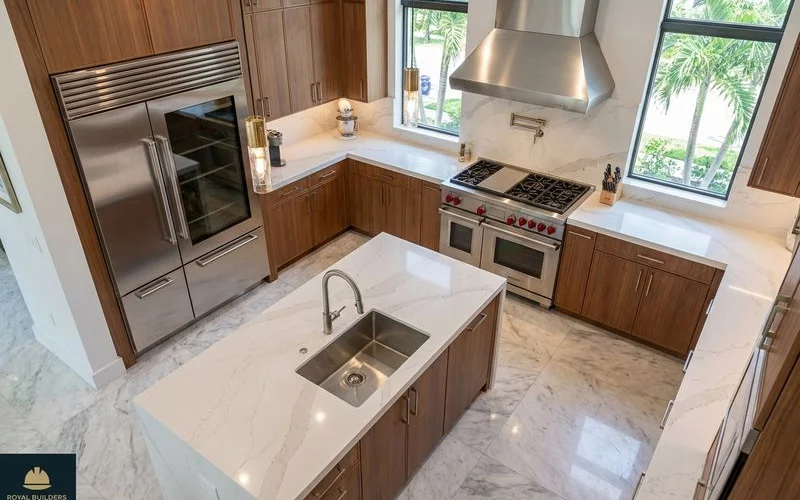
South Florida’s humidity, heat, and salt air create an environment that punishes poor material choices. Solid wood cabinet doors that are not properly sealed will warp within a year. Natural stone countertops that are not sealed regularly will absorb moisture and stain. Flooring materials like hardwood, while gorgeous in drier climates, can buckle and cup in Miami homes without meticulous moisture control.
Choose materials rated for high-humidity environments. Marine-grade finishes on cabinetry, properly sealed natural stone or engineered quartz countertops, and porcelain tile or luxury vinyl plank flooring are all excellent choices that will maintain their beauty in South Florida conditions.
Mistake 3: Cutting Corners on Cabinetry
Cabinets are the foundation of your kitchen’s form and function, yet many homeowners try to save money by selecting the cheapest options available. Particle board boxes with thin laminate doors may look acceptable on delivery day, but they degrade quickly under the stress of daily use, especially in Miami’s humid environment. Drawers stick, hinges fail, and shelves bow under the weight of dishes and cookware.
Invest in plywood box construction with solid wood or high-quality thermofoil doors at a minimum. Soft-close hinges and drawer slides are not luxury upgrades; they are standard features that prevent long-term wear and noise. Your cabinets should last 20 years or more, so this is not the place to economize.
Mistake 4: Underestimating the Importance of Lighting
A single overhead fixture is insufficient for a modern kitchen. Poor lighting makes food preparation difficult, creates unflattering shadows, and diminishes the impact of your new finishes. Despite this, lighting is often an afterthought that gets value-engineered out of the budget.
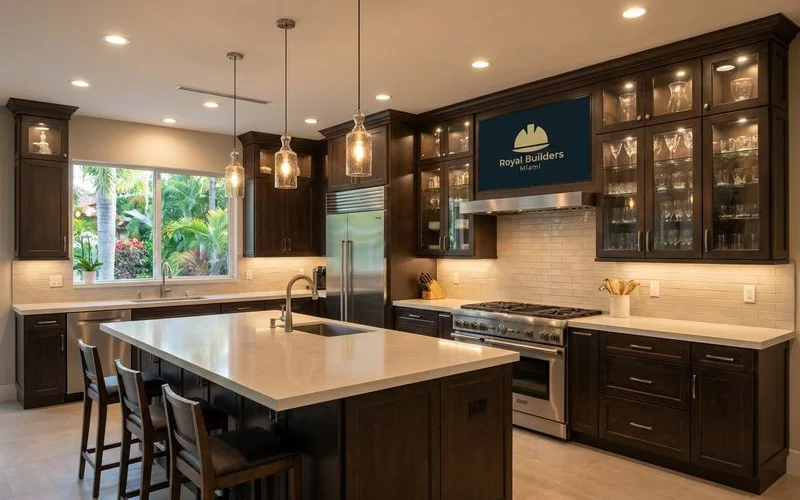
A well-lit kitchen requires three layers of lighting. Ambient lighting provides general illumination through recessed fixtures or a central pendant. Task lighting, typically under-cabinet LED strips, illuminates countertop work surfaces. Accent lighting highlights architectural features, open shelving, or glass-front cabinets. Plan your lighting design before construction begins so wiring can be roughed in at the appropriate locations.
Mistake 5: Ignoring Ventilation Requirements
Miami’s warm climate and active cooking culture make proper kitchen ventilation essential. A range hood that simply recirculates air through a charcoal filter does little to remove heat, moisture, grease, and cooking odors. Without adequate ventilation, your new paint will yellow, your cabinets will accumulate grease film, and indoor air quality will suffer.
Invest in a properly ducted range hood that vents to the exterior. The hood should be rated for the BTU output of your cooktop, and the ductwork should follow the shortest possible path to an exterior wall or roof cap. This is one area where Miami-Dade building code requirements actually work in your favor, as inspectors will verify that ventilation meets minimum standards.
Mistake 6: Skipping Permits
It is tempting to skip the permitting process to save time and money, but this shortcut carries serious consequences. Unpermitted work in Miami-Dade County can result in fines, forced removal of completed work, and complications when you sell your home. Insurance claims for water damage or electrical fires may be denied if the work that caused the issue was not properly permitted.
Any kitchen remodel involving electrical, plumbing, or structural modifications requires a permit. The permitting process ensures that work meets Florida Building Code standards, and inspections catch potential safety hazards before they become dangerous. A reputable contractor will handle the permitting process as part of the project scope.
Mistake 7: Hiring Unlicensed Contractors
The allure of a significantly lower bid from an unlicensed contractor is understandable, but the risks far outweigh the savings. Unlicensed operators cannot pull permits, may not carry liability insurance or workers compensation, and have no professional accountability if something goes wrong. In Florida, general contractors must hold an active state license and carry proper insurance to perform renovation work.
Verify your contractor’s license through the Florida Department of Business and Professional Regulation website. Ask for proof of insurance, check references from recent projects, and review a written contract that details scope, timeline, payment schedule, and warranty terms. The peace of mind that comes from working with a licensed, insured professional is worth every dollar.
The Path to a Successful Kitchen Remodel
Avoiding these seven mistakes does not require specialized knowledge. It requires careful planning, honest budgeting, climate-appropriate material selection, and a commitment to working with qualified professionals. When you invest the time to get these fundamentals right, the result is a kitchen that serves your family beautifully for decades to come.