Miami-Dade Building Permits: What Homeowners Need to Know in 2026
Building permits are one of the most misunderstood aspects of home improvement in Miami-Dade County. Many homeowners view permits as bureaucratic obstacles that add cost and delay to their projects. In reality, the permit process exists to protect you. It ensures that work performed on your home meets the structural, electrical, plumbing, and life-safety standards established by the Florida Building Code, including the stringent High-Velocity Hurricane Zone requirements that are unique to our region.
At Royal Builders Miami, we navigate the Miami-Dade permit process on behalf of our clients every day. This guide provides everything you need to understand about permits, from which projects require them to how long the process takes and what it costs.
What Requires a Building Permit in Miami-Dade?
The general rule in Miami-Dade County is simple: if you are building, demolishing, altering, or repairing any structure, you likely need a permit. The specifics, however, matter greatly.
Projects That Always Require a Permit:
- New construction of any kind, including additions and accessory dwelling units
- Structural modifications such as removing or relocating walls
- Roof replacement or significant roof repairs
- Window and door replacement, particularly with impact-rated products
- Electrical work beyond simple fixture replacement
- Plumbing work including new fixtures, re-piping, or water heater installation
- HVAC system installation or replacement
- Kitchen and bathroom remodels that involve moving plumbing or electrical
- Swimming pool construction or significant pool modifications
- Fence installation exceeding four feet in height
- Garage conversions or enclosures
Projects That Typically Do Not Require a Permit:
- Interior painting and wallpapering
- Flooring replacement that does not involve structural changes
- Cabinet replacement without plumbing or electrical modifications
- Minor cosmetic repairs and maintenance
- Replacing existing fixtures with identical specifications (like-for-like)
When in doubt, contact the Miami-Dade County Building Department or consult with your contractor. Performing permitted work without a permit can result in fines, forced removal of completed work, and complications when selling your home.
Types of Permits
Miami-Dade County issues several categories of permits depending on the nature of the work.
Building Permits cover structural work including new construction, additions, alterations, and demolition. These are the most common permits for residential renovation projects and require engineering plans or sealed drawings for anything beyond minor work.
Electrical Permits are required for new circuits, panel upgrades, rewiring, and any electrical work that goes beyond simple fixture swaps. A licensed electrical contractor must pull this permit.
Plumbing Permits cover new pipe runs, fixture relocations, water heater installations, and gas line work. A licensed plumbing contractor is required.
Mechanical Permits apply to HVAC installations, duct modifications, and ventilation work. A licensed mechanical contractor must pull the permit.
Roofing Permits are specific to roof replacement and significant repairs. The roofing contractor must provide product specifications, including Miami-Dade NOA numbers, as part of the application.
Express Permits are available for certain straightforward projects that meet specific criteria, such as like-for-like roof replacements or window replacements. Express permits are processed more quickly because they require less review, but the work must still pass inspection.
The Permit Application Process
Navigating the application process requires organization and patience. Here is what to expect step by step.
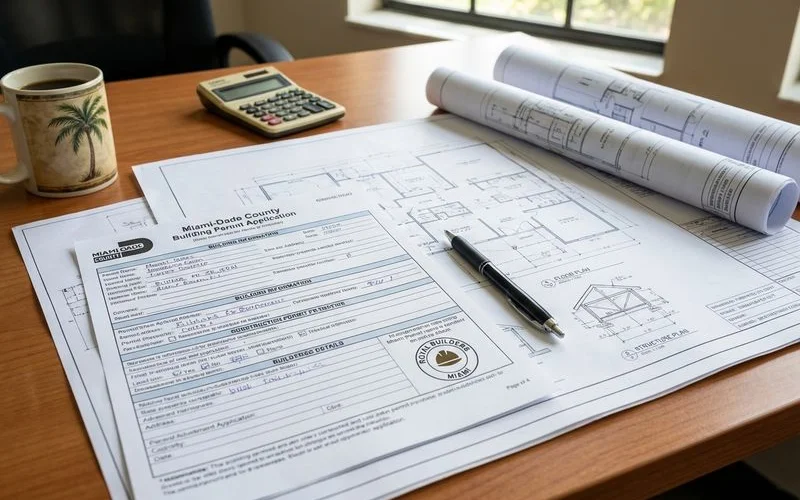
Step 1: Prepare Your Documents. Depending on the scope of your project, you may need site surveys, architectural drawings, engineering calculations, product specifications (NOA numbers for impact products), and a completed application form. For larger projects, sealed drawings from a licensed architect or engineer are mandatory.
Step 2: Submit Your Application. Miami-Dade County accepts applications through their online portal (ePlan Review) and in person at the Building Department. Electronic submission is increasingly preferred and typically results in faster processing. Your contractor should handle this process on your behalf.
Step 3: Plan Review. County plan reviewers examine your submission for code compliance. This review may involve multiple disciplines: structural, electrical, plumbing, mechanical, zoning, and environmental. Each discipline must approve the plans before the permit is issued. If reviewers identify issues, they will issue correction notices that must be addressed before approval.
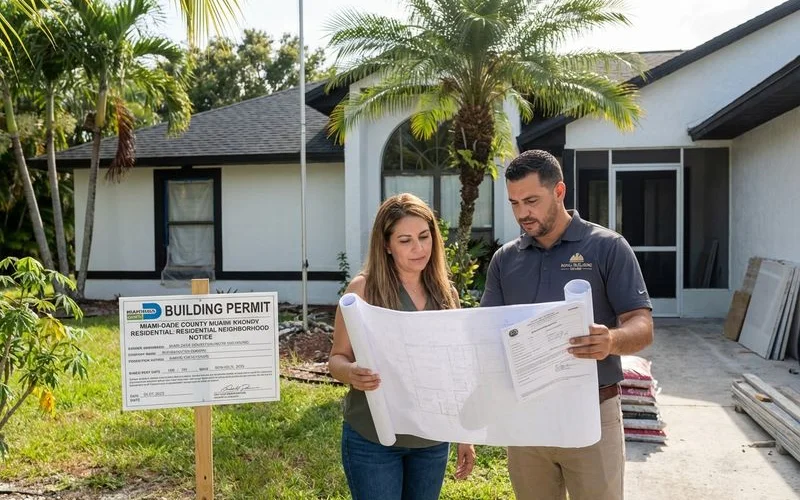
Step 4: Permit Issuance. Once all reviews are approved and fees are paid, the permit is issued. The permit card must be posted visibly at the job site before work begins.
Step 5: Construction and Inspections. Work must be performed according to the approved plans. At various stages, you or your contractor will call for inspections. Common inspection points include foundation, framing, rough electrical, rough plumbing, insulation, and final inspection.
Step 6: Final Approval. After all inspections pass, the project receives a final approval, sometimes called a Certificate of Completion. This document confirms that all work was completed in compliance with approved plans and applicable codes.
Permit Costs
Permit fees in Miami-Dade County are calculated based on the scope and value of the work. Here are typical ranges for common residential projects:
- Window Replacement (whole home): $200 to $500
- Roof Replacement: $250 to $600
- Kitchen Remodel: $300 to $800
- Bathroom Remodel: $200 to $500
- Room Addition: $500 to $2,000+
- New Construction: $2,000 to $10,000+
Additional fees may apply for plan review, technology surcharges, and special inspections. Your contractor should include permit costs in their overall project estimate so there are no surprises.
Timeline Expectations
Permit processing times vary based on project complexity and current department workload. Realistic timelines for residential projects in Miami-Dade include:
Express Permits: 1 to 5 business days for qualifying projects such as like-for-like replacements.
Standard Residential Permits: 2 to 6 weeks for projects requiring plan review. Kitchen remodels, bathroom renovations, and window replacement projects typically fall in this range.
Complex Residential Projects: 4 to 12 weeks for additions, second stories, or projects requiring multiple engineering reviews. Projects that receive correction notices will experience additional delays during resubmission cycles.
Planning your project timeline should account for these processing periods. One of the most common frustrations homeowners experience is scheduling a start date before the permit is in hand. Build permit acquisition time into your project plan from the beginning.
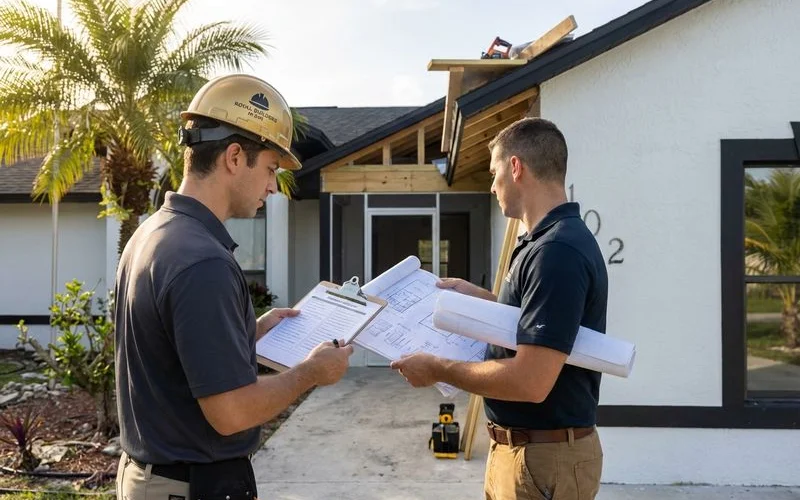
Why You Need a Licensed Contractor to Pull Permits
In Miami-Dade County, homeowners can pull permits for certain types of work on their own primary residence. However, there are compelling reasons to have a licensed contractor handle the permit process.
Expertise in Code Requirements. Licensed contractors understand the Florida Building Code and HVHZ requirements. They know what documentation is needed, how to respond to correction notices, and how to ensure the work passes inspection on the first attempt.
Liability and Insurance. When a licensed contractor pulls the permit, they assume professional liability for the work. This protects you in the event of defects or code violations. If you pull the permit yourself and hire unlicensed labor, you bear full responsibility.
Inspection Scheduling. Contractors know when to call for inspections and what inspectors are looking for at each stage. This keeps your project moving efficiently and avoids delays from failed inspections.
Resale Implications. When you eventually sell your home, title companies and buyers’ inspectors will check for open or expired permits. Work performed under a permit pulled by a licensed contractor provides clear documentation that protects the transaction. Unpermitted work or permits pulled by homeowners who used unlicensed labor can create significant complications at closing.
Consequences of Unpermitted Work
Skipping the permit process might seem tempting for smaller projects, but the risks are substantial. Miami-Dade County code enforcement can issue fines ranging from hundreds to thousands of dollars for unpermitted work. More importantly, unpermitted work can void your homeowner’s insurance coverage for damage related to the unpermitted improvement, create obstacles during a home sale, and result in orders to demolish and rebuild the work under proper permits.
The cost and time required to obtain a permit is always a fraction of the cost and headache of resolving an unpermitted work violation after the fact.
Let Royal Builders Miami Handle Your Permits
As a licensed general contractor in Miami-Dade County, Royal Builders Miami manages the entire permit process for every project we undertake. From initial application through final inspection, we ensure that your project is fully compliant, properly documented, and completed to the highest standards. Contact us today to discuss your renovation plans and let us handle the permits so you can focus on enjoying the result.