Is an Open Concept Kitchen Right for Your Miami Home?
The open concept kitchen has become one of the most requested kitchen remodeling projects in South Florida. Homeowners want to tear down walls, connect the kitchen to the living and dining areas, and create a spacious, light-filled environment for cooking and entertaining. It is an appealing vision, but the reality of achieving it involves structural engineering, permitting, careful design, and a realistic budget. Before you commit to removing walls in your Miami home, here is what you need to know.
The Appeal of Open Concept Living
Open floor plans create a sense of spaciousness that is especially valuable in Miami homes where natural light and waterfront views are premium features. An open concept kitchen allows the cook to interact with guests, provides clear sightlines across the main living areas, and makes smaller homes feel significantly larger. For families with children, the ability to supervise from the kitchen while kids play in the adjacent living room is a practical advantage.
In the Miami real estate market, open concept layouts are highly desirable. Buyers consistently gravitate toward homes that offer seamless flow between the kitchen, dining, and living spaces. A well-executed open concept renovation can meaningfully increase your home’s appeal and market value.
Structural Considerations: Load-Bearing Walls
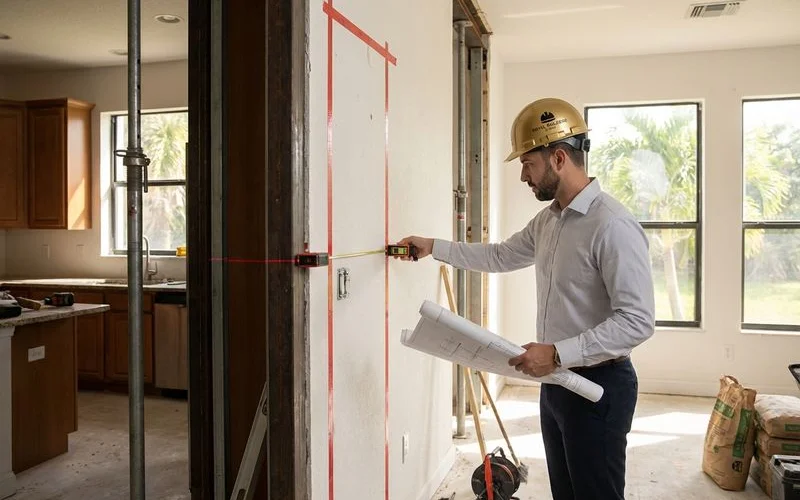
The most critical question in any wall-removal project is whether the wall in question is load-bearing. Load-bearing walls support the weight of the roof and upper floors, and removing one without proper engineering creates a structural failure risk that endangers the entire home.
A structural engineer must evaluate the wall before any demolition begins. If the wall is load-bearing, it can still be removed, but the load must be transferred to a properly sized steel or engineered lumber beam supported by adequately sized posts or columns. The beam and its supports must be designed to carry the specific load of your home’s structure, and this calculation varies from house to house.
In many Miami homes built with concrete block construction, interior walls may or may not be structural. Never assume that a wall is non-load-bearing based on its appearance or location. Professional evaluation is not optional.
Permits and Code Compliance
Miami-Dade County requires permits for any structural modification, and wall removal definitively qualifies. The permitting process involves submitting engineered drawings that show the existing condition, the proposed modification, and the structural solution. An inspector will verify that the work conforms to the approved plans and meets Florida Building Code requirements.
Attempting this type of work without permits is not only illegal but also creates serious liability. Unpermitted structural modifications can void your homeowner’s insurance, create obstacles when selling, and in the worst case, compromise the safety of the building.
Cost Breakdown for Open Concept Renovations
The cost of opening up a kitchen in Miami depends on several factors. A non-load-bearing wall removal with patching and finishing typically costs between $3,000 and $8,000. Load-bearing wall removal with a structural beam ranges from $10,000 to $25,000, depending on the span length and the complexity of the installation.
Beyond the wall itself, you should budget for several related expenses. Flooring that matches across the newly connected spaces, relocated electrical outlets and switches, relocated plumbing if the wall contained any lines, HVAC duct modifications, and finishing work including painting, trim, and ceiling repairs. When these ancillary costs are included, a complete open concept kitchen renovation typically ranges from $30,000 to $75,000 or more, depending on the scope of kitchen updates included. See our kitchen remodeling cost guide for a detailed breakdown.
Design Ideas for Your Open Concept Kitchen
The Kitchen Island as Room Divider
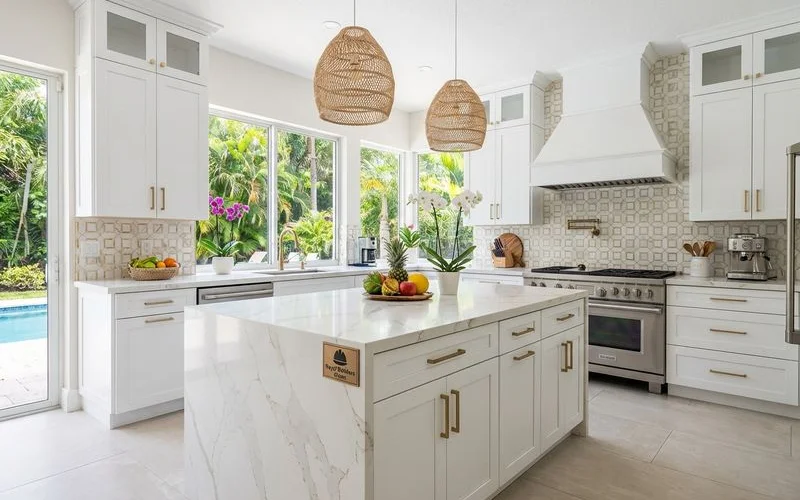
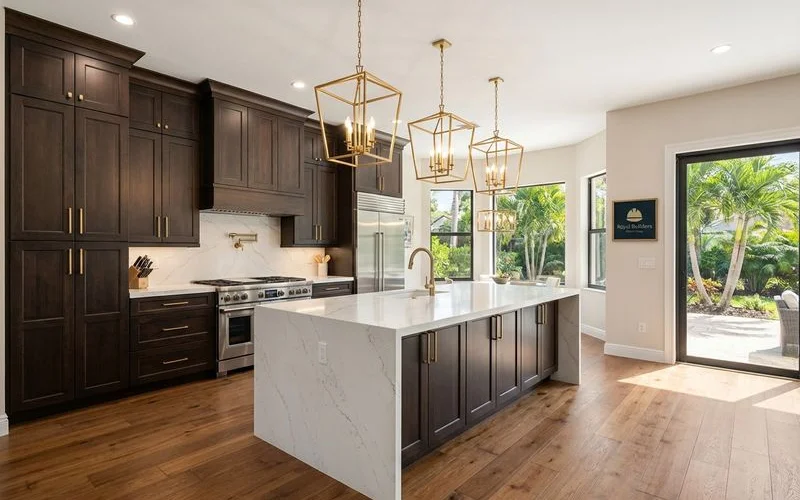
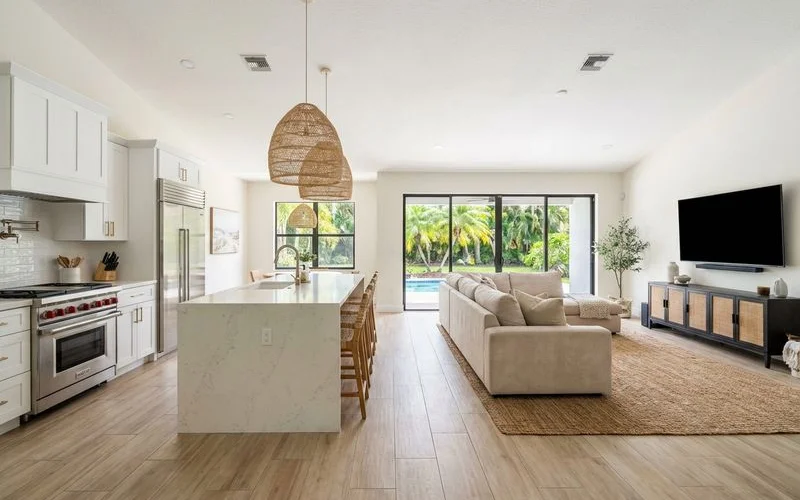
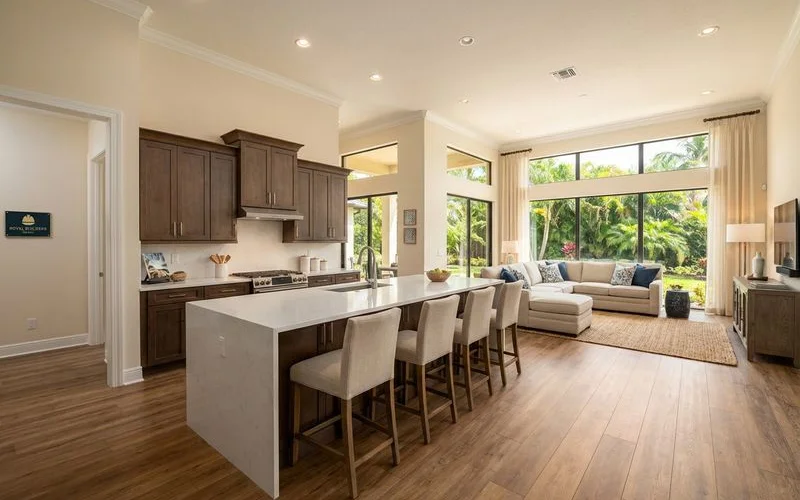
An island serves as a natural boundary between the kitchen and living spaces without blocking sightlines or light. A well-designed island provides additional storage, countertop workspace, seating for casual meals, and a visual anchor for the room. In an open layout, the island often becomes the social center of the home.
Consistent Flooring Throughout
One of the most impactful design decisions in an open concept renovation is using the same flooring material across the entire connected space. Porcelain tile that mimics natural wood or stone is particularly well-suited to Miami homes because it handles moisture, resists scratches, and requires minimal maintenance. Continuous flooring eliminates visual boundaries and enhances the sense of openness.
Defined Zones Through Lighting and Ceiling Treatment
Without walls to separate spaces, lighting and ceiling details can subtly define different zones within the open layout. Pendant lights over the island mark the kitchen’s social center, recessed lighting provides ambient illumination, and a change in ceiling height or a decorative beam can visually distinguish the kitchen zone from the living and dining areas.
Managing Cooking Odors and Noise
The practical downside of open concept kitchens is that cooking smells and noise travel freely through the connected spaces. A high-quality ducted range hood rated for your cooktop’s BTU output is essential. Consider quiet-rated dishwashers and garbage disposals, and choose countertop materials and cabinet construction that absorb rather than amplify sound.
Pros and Cons at a Glance
The benefits of an open concept kitchen include improved natural light, better traffic flow, enhanced entertaining capacity, and increased home value. The drawbacks include reduced wall storage, cooking odors spreading to living areas, less noise isolation, and the higher renovation cost associated with structural work.
Making the Right Decision
An open concept kitchen renovation is a significant undertaking, but when executed properly, it transforms the way you experience your home. The key is engaging qualified professionals, understanding the structural and code requirements, budgeting realistically, and designing a space that balances aesthetics with the practical demands of daily cooking and living. A consultation with an experienced Miami contractor is the ideal starting point for evaluating whether an open concept layout is the right move for your home.