Maximizing Space in a Small Miami Bathroom
Small bathrooms are a reality in many Miami homes, from vintage Coral Gables bungalows to modern high-rise condominiums. A compact bathroom does not have to feel cramped, dark, or dysfunctional. With thoughtful design, strategic material selection, and clever storage solutions, even the smallest bathroom can become a stylish, efficient space that exceeds expectations. Here are the design strategies and renovation ideas that Miami homeowners can use to transform a tight bathroom into something exceptional.
Floating Vanities: The Foundation of Small Bathroom Design
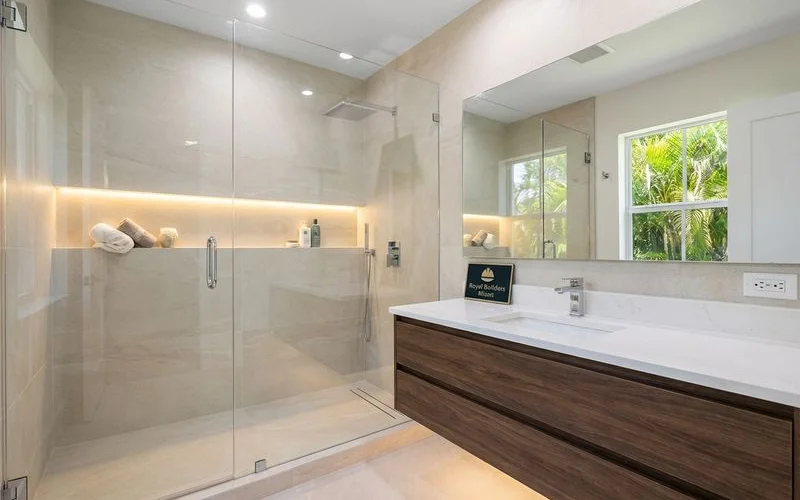
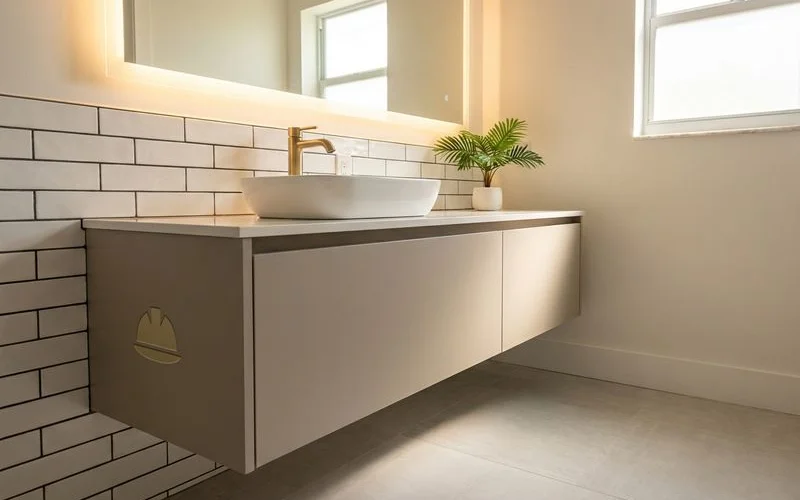
A wall-mounted floating vanity is one of the single most effective changes you can make in a small bathroom. By eliminating the base that touches the floor, a floating vanity creates visible floor space beneath it, which tricks the eye into perceiving a larger room. The exposed floor area also makes cleaning easier and provides a natural spot for a small basket or step stool.
Choose a vanity with integrated storage, including drawers rather than cabinet doors, which are more efficient in tight spaces. A slim-profile vanity in the 24 to 30-inch range works well for small bathrooms while still providing adequate countertop space and storage capacity. Pair it with a wall-mounted faucet to maximize usable counter area.
Frameless Glass Shower Enclosures
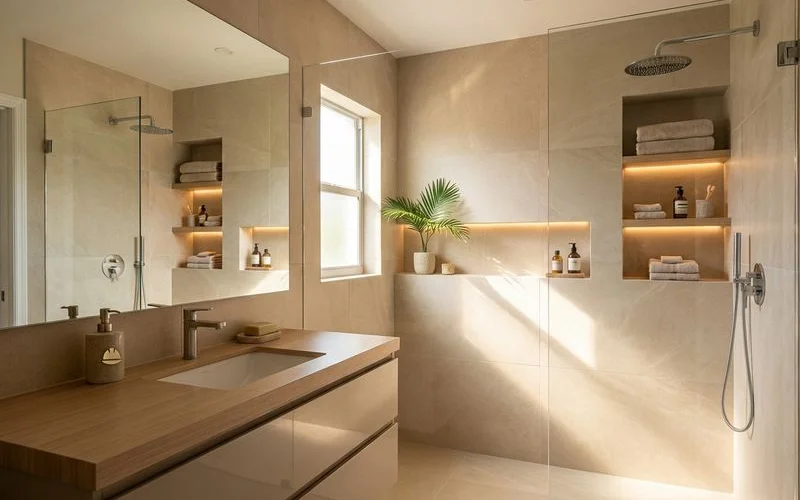
Nothing opens up a small bathroom visually like a frameless glass shower enclosure. Traditional shower curtains and frosted glass doors create visual barriers that make the room feel smaller than it is. Clear frameless glass allows the eye to travel uninterrupted through the entire bathroom, making the shower area feel like part of the larger space rather than a separate compartment.
A curbless or low-threshold walk-in shower entry enhances this effect further by eliminating the visual boundary at the floor level. The continuous floor surface from the bathroom into the shower creates seamless spatial flow that is particularly effective in tight quarters. Curbless showers also improve accessibility, which is a valuable feature for Miami’s diverse homeowner population.
Large-Format Tiles: Fewer Grout Lines, Bigger Feel
The conventional wisdom that small bathrooms require small tiles is outdated. Large-format tiles, in sizes of 12 by 24 inches or larger, actually make small bathrooms feel more spacious because they reduce the number of grout lines. Grout lines create visual busy-ness that can make a small space feel cluttered and compressed. Fewer lines mean a cleaner, more expansive visual field.
Use the same tile on both the floor and shower walls to create continuity. A light-colored porcelain tile in a natural stone look is an excellent choice for Miami bathrooms because it reflects light, resists moisture, and requires minimal maintenance. Check out the latest flooring trends in South Florida for more inspiration. Extending the same tile from floor to wall height eliminates the visual interruption of different materials meeting and further enhances the sense of spaciousness.
Strategic Mirror Placement
Mirrors are the most cost-effective way to visually double the size of a small bathroom. A large mirror, ideally spanning the full width of the vanity wall, reflects light and depth to create the illusion of a much larger room. Consider extending the mirror all the way to the ceiling for maximum impact.
Backlit mirrors add another dimension by providing soft, ambient lighting that eliminates shadows and makes the space feel warm and inviting. The LED backlighting also serves as an efficient night light and creates a spa-like atmosphere that elevates the entire bathroom experience.
Storage Solutions for Compact Bathrooms
Recessed Niches
Built-in recessed niches in the shower and above the vanity provide storage without taking up any floor space. A properly waterproofed shower niche eliminates the need for hanging caddies and corner shelves, keeping the shower area clean and uncluttered. Niches can be tiled to match the surrounding walls for a seamless look or finished with a contrasting accent tile to create a design feature.
Vertical Storage
When floor space is limited, think vertically. Tall, narrow cabinets, open shelving above the toilet, and wall-mounted organizers make use of vertical space that would otherwise go unused. A ladder-style shelf leaning against the wall provides multiple tiers of storage in a footprint of less than one square foot.
Medicine Cabinets with Depth
A recessed medicine cabinet behind the mirror provides concealed storage for toiletries, medications, and daily essentials without projecting into the room. Modern medicine cabinets with mirrored interiors and integrated lighting offer significantly more storage than surface-mounted alternatives while maintaining a clean, flush profile.
Light Colors and Natural Light
Light color palettes make small rooms feel larger. Whites, soft grays, pale blues, and warm neutrals reflect natural and artificial light, creating an airy atmosphere. This does not mean the bathroom must be bland. Contrast can be introduced through darker fixtures, hardware, and accessories that pop against the light backdrop.
Maximize natural light wherever possible. If the bathroom has a window, keep it unobstructed or use frosted glass for privacy without sacrificing light. A solar tube or skylight is another option that brings natural light into interior bathrooms without structural complications.
Pocket Doors and Space-Saving Fixtures
A standard bathroom door requires 7 to 9 square feet of clear floor space to swing open. In a small bathroom, a pocket door eliminates this wasted space entirely by sliding into the wall cavity. The space freed up can accommodate a wider vanity, additional storage, or simply more room to move comfortably.
Similarly, compact fixtures designed specifically for small bathrooms can reclaim precious inches. Narrow-depth vanities, round rather than elongated toilets, and corner sinks all reduce the fixture footprint while maintaining full functionality.
Miami-Specific Considerations
South Florida’s climate adds specific requirements to small bathroom design. Proper ventilation is critical because humidity in a confined space promotes mold growth. Install a quality exhaust fan rated for the bathroom’s square footage and run it during and after every shower. Choose moisture-resistant materials throughout, including mold-resistant drywall, porcelain tile, and marine-grade finishes on any wood elements.
In coastal areas, salt air corrosion is an additional concern. Select fixtures and hardware in finishes rated for coastal environments, such as solid brass, stainless steel, or high-quality chrome-plated options designed for marine use.
Transforming Small into Spectacular
A small bathroom renovation does not require a massive budget to achieve dramatic results. By combining space-maximizing design strategies with quality materials appropriate for Miami’s climate, you can create a bathroom that feels spacious, functions beautifully, and adds genuine value to your home. The key is working with a designer or contractor who understands how to optimize every square inch and select materials that will perform in South Florida’s demanding environment.