Tile Roof vs Metal Roof: Finding the Best Option for Your Miami Home
When it comes time to replace your roof in Miami, the two materials that deserve the most serious consideration are tile and metal. Both offer exceptional performance in South Florida’s demanding climate, both meet and exceed Miami-Dade County’s stringent hurricane code requirements, and both deliver long-term value that justifies their higher upfront cost compared to asphalt shingles. But they differ in meaningful ways that affect aesthetics, performance, maintenance, and cost. This comprehensive comparison will help you determine which material is the best investment for your specific home and priorities.
Durability and Lifespan
Tile Roofing
Concrete tile roofs in Miami typically last 40 to 50 years, while premium clay tile roofs can last 50 to 75 years or more with proper maintenance. Tile is inherently resistant to rot, insect damage, and fire. Individual tiles can crack under impact from falling debris, but damaged tiles are relatively straightforward to replace without disturbing the surrounding installation.
The underlayment beneath tile roofing, which serves as the actual waterproof barrier, has a shorter lifespan than the tile itself. In Miami’s heat, standard underlayment may need replacement every 20 to 30 years, even if the tile above is in excellent condition. This is an important cost consideration that many homeowners overlook when evaluating the long-term economics of a tile roof.
Metal Roofing
Quality standing seam metal roofs in Miami last 40 to 70 years depending on the material. Galvalume steel, the most common option, offers a 40 to 60-year lifespan. Aluminum, which is preferred in coastal areas due to its resistance to salt corrosion, matches this range. Premium materials like copper and zinc can last 80 to 100 years.
Metal roofing does not crack, warp, or break under impact the way tile can. Its fastening systems are engineered to resist wind uplift at the full rated wind speed throughout the roof’s lifespan. The primary maintenance concern with metal roofing is the integrity of the finish coating and the fastener seals, both of which are easily monitored and maintained.
Hurricane Resistance
Both tile and metal roofing systems can be designed and installed to meet Miami-Dade County’s High Velocity Hurricane Zone requirements, which are among the most stringent in the world. However, they handle hurricane forces differently.
Tile in Hurricanes
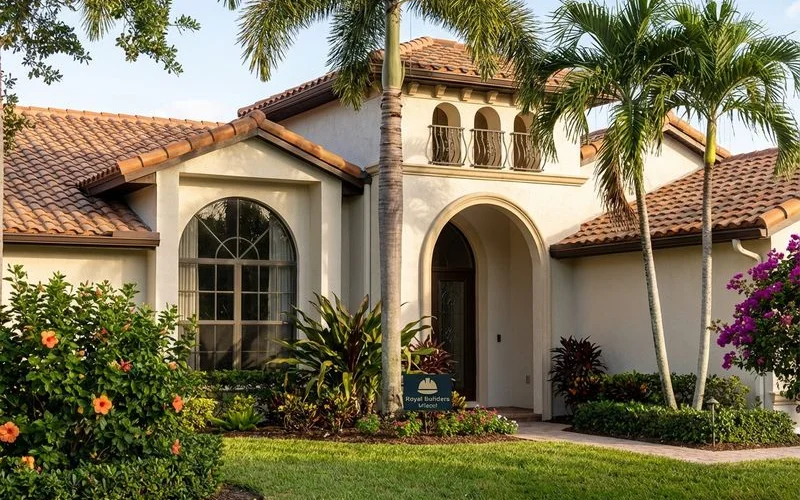
Tile roofs perform well in high winds when properly installed with mechanical fasteners or foam adhesive systems rated for the required wind speed. The weight of tile, which ranges from 600 to 1,100 pounds per 100 square feet, provides inherent resistance to wind uplift. However, individual tiles can be dislodged or broken by windborne debris during a major hurricane, exposing the underlayment below. If the underlayment is intact, the roof continues to shed water even with missing tiles, but the exposed areas must be repaired promptly.
Metal in Hurricanes
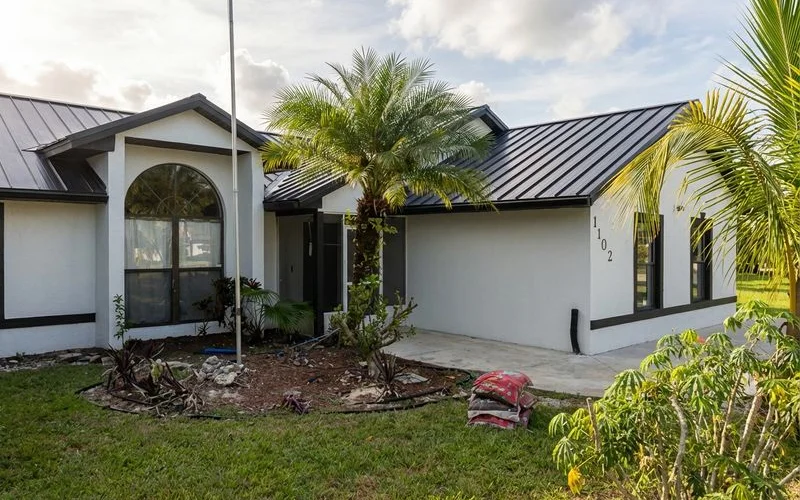
Metal roofing, particularly standing seam systems with concealed fasteners, offers among the highest wind resistance ratings available. Premium standing seam systems are rated for wind speeds of 160 to 180 miles per hour or more. The interlocking panel design distributes wind forces across the entire roof surface, and the absence of individual pieces that can be pried loose by wind gives metal an advantage in extreme conditions. Metal roofing is also impervious to windborne debris below a certain impact threshold, meaning it does not crack the way tile can.
Energy Efficiency
Metal roofing holds a significant advantage in energy efficiency, which is a critical consideration in Miami where cooling costs dominate household energy budgets. Metal roofs with reflective coatings can reflect 65 to 75 percent of solar energy, dramatically reducing the heat transferred into the attic space below. Studies by the Florida Solar Energy Center have documented cooling energy savings of 10 to 25 percent with reflective metal roofing compared to darker, more absorptive materials.
Tile roofing also offers energy benefits, though typically less dramatic than metal. The thermal mass of tile helps moderate temperature swings, and the air gap created by the tile profile above the roof deck provides a degree of natural ventilation. Light-colored tiles reflect more solar energy than dark tiles, and some manufacturers offer cool-roof rated tile products.
For Miami homeowners focused on reducing energy costs and environmental impact, metal roofing with a high-reflectance coating is the superior choice. The energy savings over the roof’s lifespan can offset a meaningful portion of the installation cost.
Cost Comparison
Tile Roofing Costs
For a typical 2,000-square-foot Miami home, a concrete tile roof replacement costs $15,000 to $25,000, while clay tile ranges from $20,000 to $35,000. These costs include tear-off of the existing roof, new underlayment, tile installation with code-compliant fastening, flashings, and all permits and inspections. Remember to budget for underlayment replacement at the 20 to 30-year mark, which adds approximately $5,000 to $10,000 to the lifetime cost.
Metal Roofing Costs
A standing seam metal roof for the same home typically costs $18,000 to $30,000 for galvalume steel and $22,000 to $35,000 for aluminum. Premium metals like copper or zinc start at $35,000 and can exceed $50,000. These costs include all materials, labor, permits, and inspections. Metal roofing does not require mid-life underlayment replacement, which improves its long-term cost position relative to tile.
Maintenance Requirements
Tile Roof Maintenance
Tile roofs require periodic inspection and maintenance to maximize their lifespan. Cracked or displaced tiles should be replaced promptly to prevent water intrusion. Debris accumulation in valleys and at transitions must be cleared to maintain proper drainage. Growth of algae and moss, while less common on tile than on shingle roofs, should be addressed when it appears. And as noted, the underlayment will likely need replacement before the tiles themselves reach end of life.
Metal Roof Maintenance
Metal roofing is one of the lowest-maintenance roofing options available. Annual inspection of fasteners, seams, and flashing connections is recommended, along with clearing debris from gutters and valleys. The finish coating should be inspected for scratches or wear that could lead to corrosion, though modern coatings are remarkably durable. In coastal Miami locations, periodic rinsing to remove salt deposits helps preserve the coating finish on steel roofs. Aluminum roofs are naturally resistant to salt corrosion and require even less attention.
Aesthetics and Architectural Compatibility
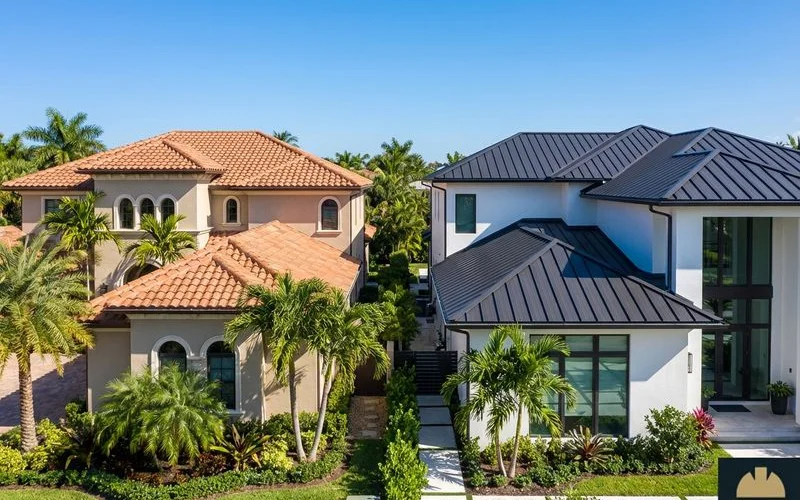
Tile roofing is deeply intertwined with Miami’s architectural identity. The Mediterranean, Spanish Colonial, and Mission-style homes that define neighborhoods throughout Coral Gables, Coconut Grove, and Miami Beach were designed with tile roofs, and the warm earth tones of clay and concrete tile complement these styles perfectly. Replacing a tile roof with metal on a traditional Miami home can look incongruous and may face resistance from homeowner associations or historic preservation boards.
Metal roofing has traditionally been associated with contemporary and modern architectural styles, where its clean lines and uniform appearance complement flat and low-slope designs. However, metal roofing is now available in profiles that mimic the appearance of tile, shake, and slate, broadening its aesthetic compatibility. These stamped metal panels offer the look of traditional materials with the performance advantages of metal.
Making Your Decision
Choose tile roofing if your home features traditional Mediterranean, Spanish, or Colonial architecture, if visual authenticity to the original design is important, if you prefer the look and character of natural materials, and if your homeowner association requires tile.
Choose metal roofing if energy efficiency and reduced cooling costs are priorities, if you want the longest lifespan with the least maintenance, if your home features modern or contemporary architecture, if maximum hurricane resistance is your primary concern, or if you plan to install solar panels in the future, as metal roofs are the ideal substrate for solar mounting systems.
Both tile and metal are excellent investments for Miami homes. Neither choice is wrong. The right decision depends on your home’s architecture, your performance priorities, your long-term maintenance preferences, and your budget. A consultation with a licensed Miami roofing contractor who installs both materials can help you evaluate the options specific to your home and make a confident decision.